

Prostitute in Paris: Arab Noise, Satire, and the Making of an Anti‑Hero
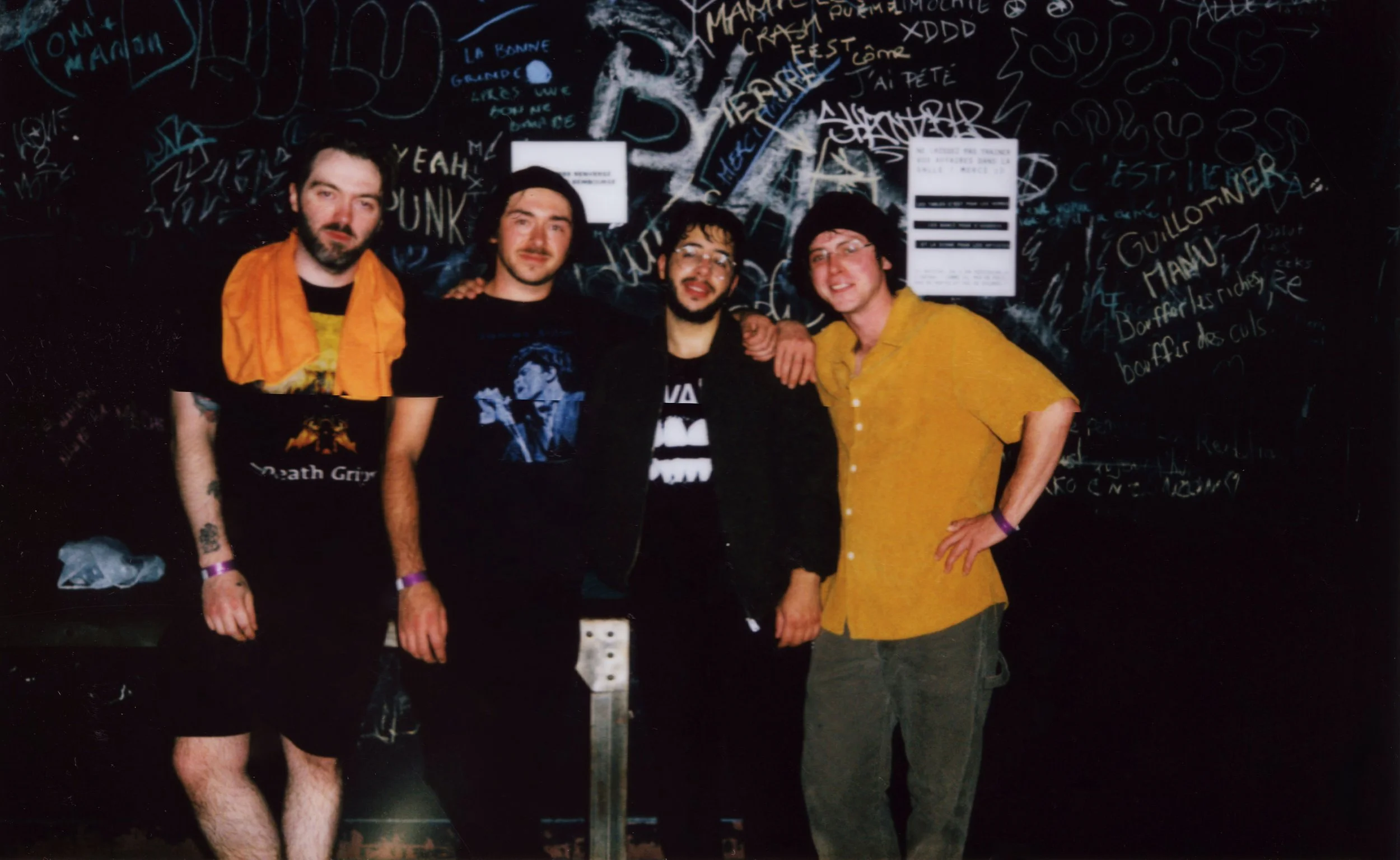
Prostitute by Sixtine cail
I was able to catch Prostitute on their first stop of their first ever Europe tour. Listening to their first and only album Attempted Martyr all day beforehand, their set still felt like hearing something entirely new. Prostitute’s music is entirely different to anything else that’s out there. Coming from Dearborn, Michigan, the city in the United States with the largest Arab American population as well as its very own underground music scene, the primary songwriters and creators of the band Moe and Andrew mix their influences by creating classic punk rock with an arab inspired sound.
Seeing them in Paris, I was finally able to witness the character that Moe, the band’s lead singer, has created through the music. The character is essentially a caricature of everything he’s always feared to be perceived as as an Arab living in the United States post 911, when their villainization was at its height. He plays the aristocratic, out-of-touch Arab prince who wants everybody dead. He kept this character on stage as the Paris crowd cheered him on. He stared back at them with a deadpan, expressionless face and I could not stop laughing.
It had been almost exactly a year since they first released their debut EP and I was excited to ask them questions after the show. I was able to speak with Moe, Andrew (the band’s drummer as well as co-founder), Ross (the guitarist), and Craig (the bassist momentarily replacing Dylan for the tour). Here’s how it went:
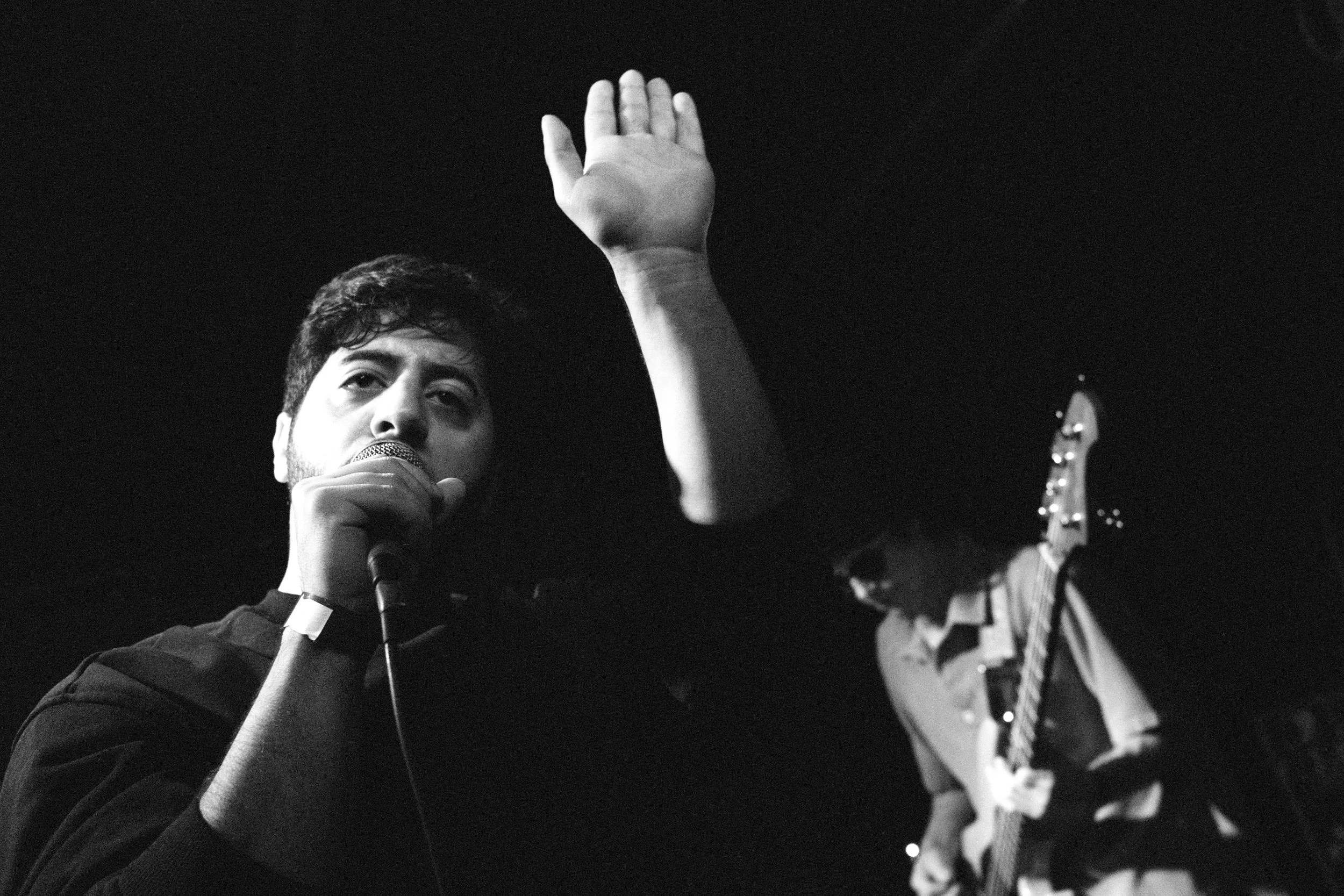
Prostitute by Sixtine cail
NOIZE: So this is your first European tour right?
ALL: Yes. Yeah.
NOIZE: Is there a specific stop that you’re looking forward to?
ROSS: Um, I mean, UK. The UK is gonna be great. London’s gonna be great. It’s fun. Mute is based out of London and they've been doing a lot of work getting boots on the ground about us over there, and we got two sold out shows over there. Yeah, so it’s gonna be a good one.
NOIZE: First of all, Congratulations on a year of the album, that’s super cool.
ALL: Thank you, thank you.
NOIZE: Has the way you look at the album changed at all in that year?
ANDREW: Yeah. Oh, yeah one hundred percent. I mean it's been finished for… four years?
MOE: We nearly broke up like seven months ago–
ROSS: Four weeks ago!
CRAIG: Seven months ago, two years ago, four weeks ago…
ANDREW: Every other week.
MOE: So, I think for everybody the album is– there’s some trauma there, you know. And there’s some, like, we’re tired of the same thing.
ROSS: Especially [in] new places. It’s always great to see people get super hype about these songs and like coming overseas and seeing people sing along to them which is crazy. You know what I mean?
MOE: They know the lyrics to unreleased songs.
It was at this point we were interrupted by a French fan
FAN: Hi guys. We just wanted to greet you because it was amazing. Thank you so much.
MOE: thank you!
FAN: (to Craig) I already greeted you, but…
CRAIG: Yes, sir
FAN: one more time because you deserve it. Have you ever been told you look a little bit like Timothee Chalamet?
(all laugh)
FAN: I mean he’s a good looking dude, so nothing to worry about. Yeah, thank you. That was amazing. Thank you so much.
(comes up to me) NOIZE: I’m not in the band (laughs).
FAN: You can be manager!
NOIZE: Yeah, I’ll take that.
MOE: We're doing an interview. What do you want to say?
FAN: I mean, that was nothing short of amazing. That’s one of the best band around right now. And I think they give a new outlook to the whole noise genre, so…
NOIZE: Niceee. Okay. Thank you.
FAN: Sorry for interrupting.
NOIZE, MOE: No problem.
He walks away
MOE: Tell Macron we wanna see him personally.
NOIZE: He should have been here tonight.
ALL: He should have.
NOIZE: But is there anything, like, I mean, you guys have had so much press on the album. Is there anything you’ve read that kind of stuck out to you?
ROSS: What was that rataplan one?
MOE: Ratap– I don’t know
ANDREW: Oh, Pitchfork?
MOE: Oh, Pitchfork says Rataplan.
ROSS: Pitchfork said Rataplan.
ANDREW: Yeah, yeah it was a fortuitous rataplan.
(all laugh)
ROSS: yeah, just some verbose stuff that I heard. I had to look up some words.
MOE: I do love that review. Nina’s a very good writer.
CRAIG: It was a great review for sure.
MOE: It was just a funny word. I’ve never heard of it.
ROSS: Yeah. It stuck out. I had to look up like three words in it.
NOIZE: Yeah that is true actually. I read some of the reviews and I was like hmm I wonder what that word means.
MOE: Andrew what would you say?
ANDREW: about the interview?
MOE: to the question.
ANDREW: To the ques– I’ll say I don’t read ‘em.
MOE: You did read an interview!
ANDREW: The Pitchfork one?
MOE: You read the uhhh
MOE: the murder… spider…
ANDREW: F Burger Spider. Asperger Spider?
MOE: Nooo Stereogum! Stereogum.
ANDREW: I don’t remember what that was. Yeah, I like uhh… people leave comments on Bandcamp. Some people send emails.
NOIZE: Is that what you look at more?
ANDREW: I mean I kind of briefly see all the reviews. I don't really… I just gloss over it. But the Bandcamp stuff, emails, they all seem very genuine, very serious. It's not a reviewer, it's a fan.
NOIZE: Yeah exactly.
ANDREW: It’s a very nice thing.
MOE: All the press is very nice and it’s very great to see people appreciating such disturbing content.
NOIZE: Yeah, people are getting it.
CRAIG: There was a comment on the Judge video that was like within the first month of posting it that was like; How could anyone let such–
MOE: Tomfoolery
CRAIG: – Heretic filth…
MOE: We pinned it. You can see the comments. It’s from somebody named Barbara.
NOIZE: Of course. Is there a song that you think is underrated on the album?
ANDREW: (pointing to Ross) Oh, he definitely has an opinion on that one.
ROSS: Yeah, Senegal. I think Senegal and [In The Corner] Dunce are underrated on the album. They're not necessarily, like, aligning with the rest of the album in terms of sound, but I just love playing those songs. And I think they’re great for what they are. They kind of stand alone on the album, but also I think– like, Senegal is just– when, I think it was Pitchfork was saying that the guitar sounds like it’s gasping for air, I think they’re talking about Senegal. And like, that's why I love it because it’s just so powerful and raw. It’s simple and it’s kind of dumb at times but also that’s sometimes the most impactful stuff. So, for me, Senegal.
MOE: My answer would be Harem Induction Hour, but it’s a hard song to pull off. It’s very hard.
NOIZE: how come?
MOE: It’s like a seven-man ballad.
ANDREW: It’s the same thing over and over again.
MOE: It’s so repetitive and it requires… I don’t know what would you say (turning to Andrew).
ANDREW: We don’t practice it enough.
MOE: We don’t practice it enough. I was expecting you to come up with some philosophy! (mimicking Andrew) we don’t practice it enough.
CRAIG: On the record though, preparing for this tour, I had to listen back to the record a lot because I, you know, I’m not the usual bass player. Our bass player, Dyl, you know… we all still work, so he couldn’t get the PTO, to be honest. But that being said, having to look at all this material, I listened to Harem [Induction Hour] again and I was like… it’s about three minutes in where your guitar does a little fluttery thing and it’s just gorgeous. It’s fucking– it just came together so…
ANDREW: I have the same answer.
MOE: It’s a very beautiful song.
ANDREW: Great melody. Great lyrics.
NOIZE: Is it the favorite song to play for all of you? Or is that like a different song?
ANDREW: No. We never play it.
ROSS: That one hurts my hand!
MOE: That one hurts.
ROSS: Because it’s literally just bar chords the whole time and by the end of it this muscle on my thumb is just cramping. It’s terrible!
CRAIG: Yeah. Anything else.
ROSS: Favorite to play though? M. Dada.
MOE: M. Dada, yeah. Or All Hail. All Hail always gets a beautiful response. It’s the horns. People hear the horns and it's primal. They just wanna go to war.
NOIZE: for the next album, was the process of making it easier or harder than the first one?
ANDREW: I think it’s going way easier. Because, I mean, the first one, a lot of it, most of it, was me and Moe, and now the full band is integrated, contributing…
MOE: It’s also, the first one is also very sample heavy, and working with samples and live instruments, it has a lot of challenges because it’s an instrument that requires computer precision because it’s all on a metronome. It’s all on a grid. So, even for me, songs that are computer precise… it’s hard to be that precise as a human being, because human beings aren’t as precise as computers.
ANDREW: There's a lot of layers to a sample so it’s hard to fit in the band.
NOIZE: Okay. and you said [the next album] would be a little bit electronic? Maybe a little more dance punk?
ANDREW: The next album?
NOIZE: Yeah, right?
ANDREW: We were just saying stuff.
(all laugh)
ANDREW: That's part of it.
MOE: It’s more dancey. It’s more Arab, mystic. Mysticism is in there.
ROSS: A couple of the songs, not the last song, but the two before that are ones that are gonna be on the next album. And it’s gonna be stuff that’s in that vein.
ANDREW: It’s still evolving. We’re still writing.
NOIZE: Okay. And you said it was going to be more offensive?
MOE: Yeah, yeah.
NOIZE: I’m excited for that.
MOE: Yeah, It’s gonna go wild.
NOIZE: Okay, nice, like in what way? I think I know, but…
MOE: I don’t know. It’s like… Lolita.
(all laugh)
NOIZE; Whoa, timeout… no, go ahead, go ahead.
MOE: I’m joking, I’m joking. This is a really good point by the way. Me and you have talked about this (referring to Andrew). So I don’t feel that pretentious saying this out loud because you and I have talked about it. Okay, backstory–
ROE: We’re roping Andrew into this.
ANDREW: Backstory…
ANDREW, MOE: Lolita!
MOE: Okay, very quickly. To me, what’s cool, what I like is shocking, outlandish statements, but like, with some philosophy behind it, with some meaning behind it. I’m just using Lolita as an example because, for instance, when it was written, the intention of it– and, Andrew, correct me if I’m wrong– but the intention of the book wasn’t some pedophile fanfiction. The point of it was to show how you fucked up the main character is, the protagonist is, but how easily– because he’s so charming in the book– how easily you side with him. And that was the intention, was to make it–
ANDREW: Well not side, but… he’s charismatic.
MOE: Yeah. The intention was, the author was like I’m going to just tell his side of the story and because he’s so charming and charismatic, you’re going to side with him even though what he’s doing is reprehensible, And I’m going to show you, the reader, that you are the problem here by siding with him. And to me that’s really cool. It’s cool to take an awful person, awful subject matter, and like make… I don’t want human centipedes. I don’t want human centipedes, there is no meaning behind people’s asses– people’s mouths on other people’s asses and making them shit out. There’s no meaning there. But there’s a lot of shocking stuff, a lot of crazy, offensive, controversial stuff that has meaning, and I think it’s cool to me.
ROSS: I also think that, it’s like, you know, like early Swans, they did a lot of stuff like that where it was this very bold satire on these characters that represent these horrible acts that can be carried out, and they don’t align with that kind of behavior, but they're making people aware that there are people like that that actually exist in the world. They're painting them in this terrifying way because that’s how they should be painted at the same time. That’s always kind of been the intention of my guitar playing is to make it sound like someone is terrified for their life. It kind of instills that feeling within people and brings them back down to earth and off this immortal pedestal that a lot of people try to stand on.
NOIZE: Yeah, for sure. Okay, okay last question. Since the success of Attempted Martyr, have you seen a change in the Dearborn scene at all?
ANDREW: No.
NOIZE: That was fast.
ROSS: (to Moe) Well, you’re on a song with The Armed.
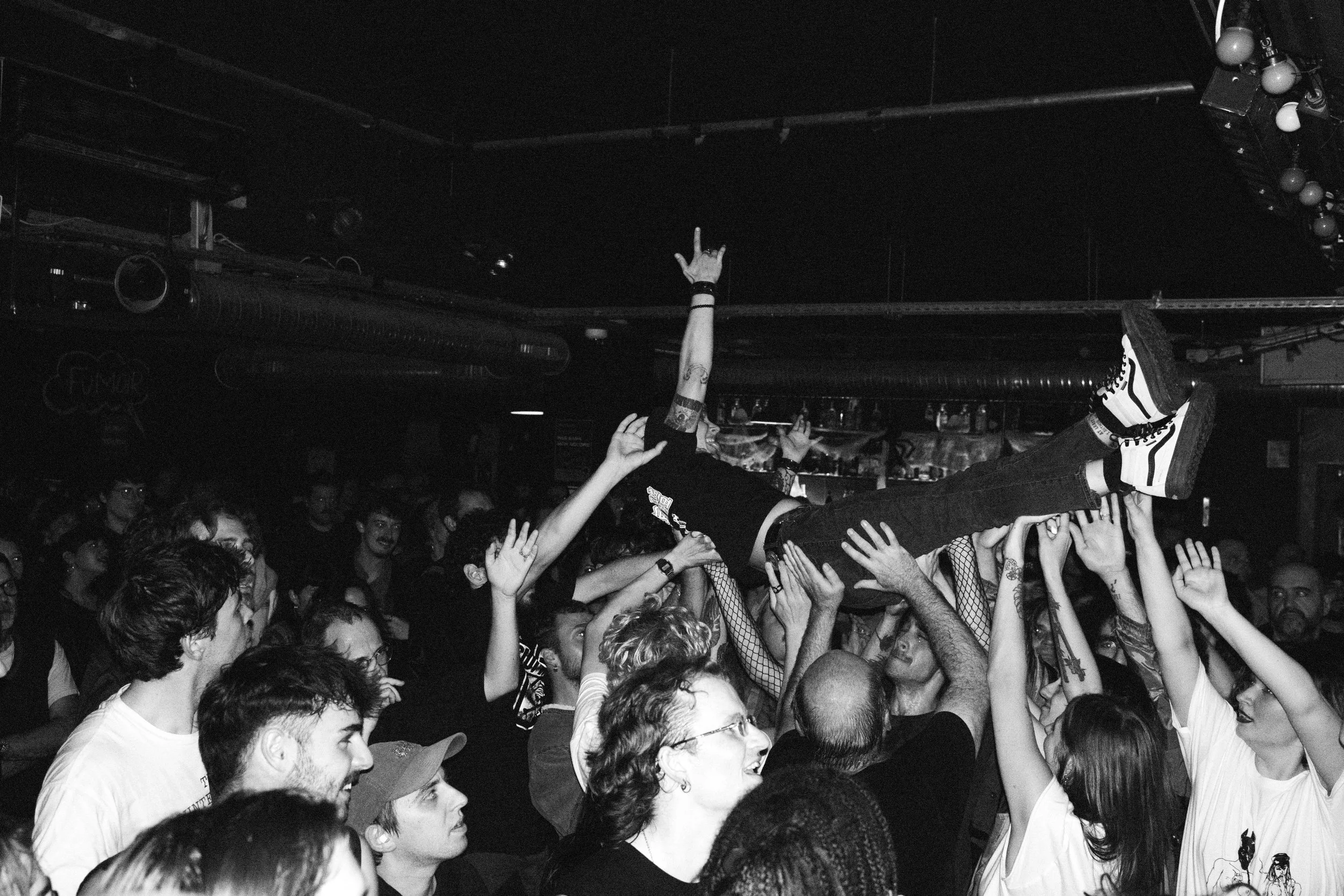
Prostitute by Sixtine cail
MOE: Yeah. I mean, I’ve seen a little, like in the Arab communities, that they want to explore different stuff, but it’s still rooted in either playing traditional music or mixing that stuff in with jazz. I haven’t heard people use our characteristics or be influenced by our characteristics. I haven’t heard that, but I've been hearing, I guess, some Arab musicians being not afraid to experiment. I have heard it a little. I don’t know if that’s due to us, but there is huge support among our community in Dearborn for us. So, I don’t know. I can’t say whether that’s attributed to us. But I am noticing something different.
I’m thrilled that I was able to learn so much more about Prostitute and their influence. I, as well as the rest of their fans, truly believe that they are on the precipice of something truly unique within the alternative music scene. I would love to see more bands put as much thought into the personification of their music as Prostitute as well as use elements from their own culture.
